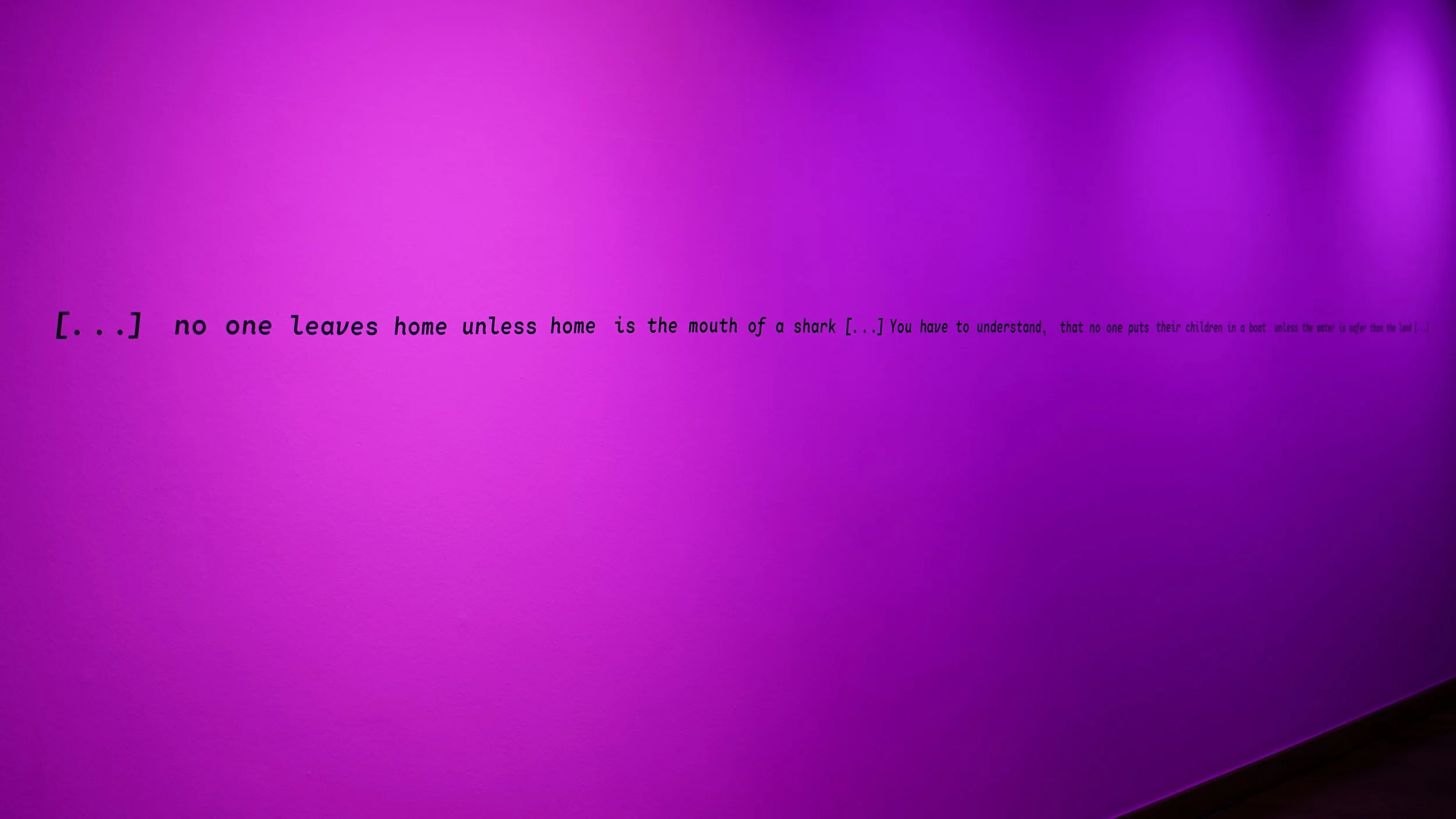
unless the water is safer than the land
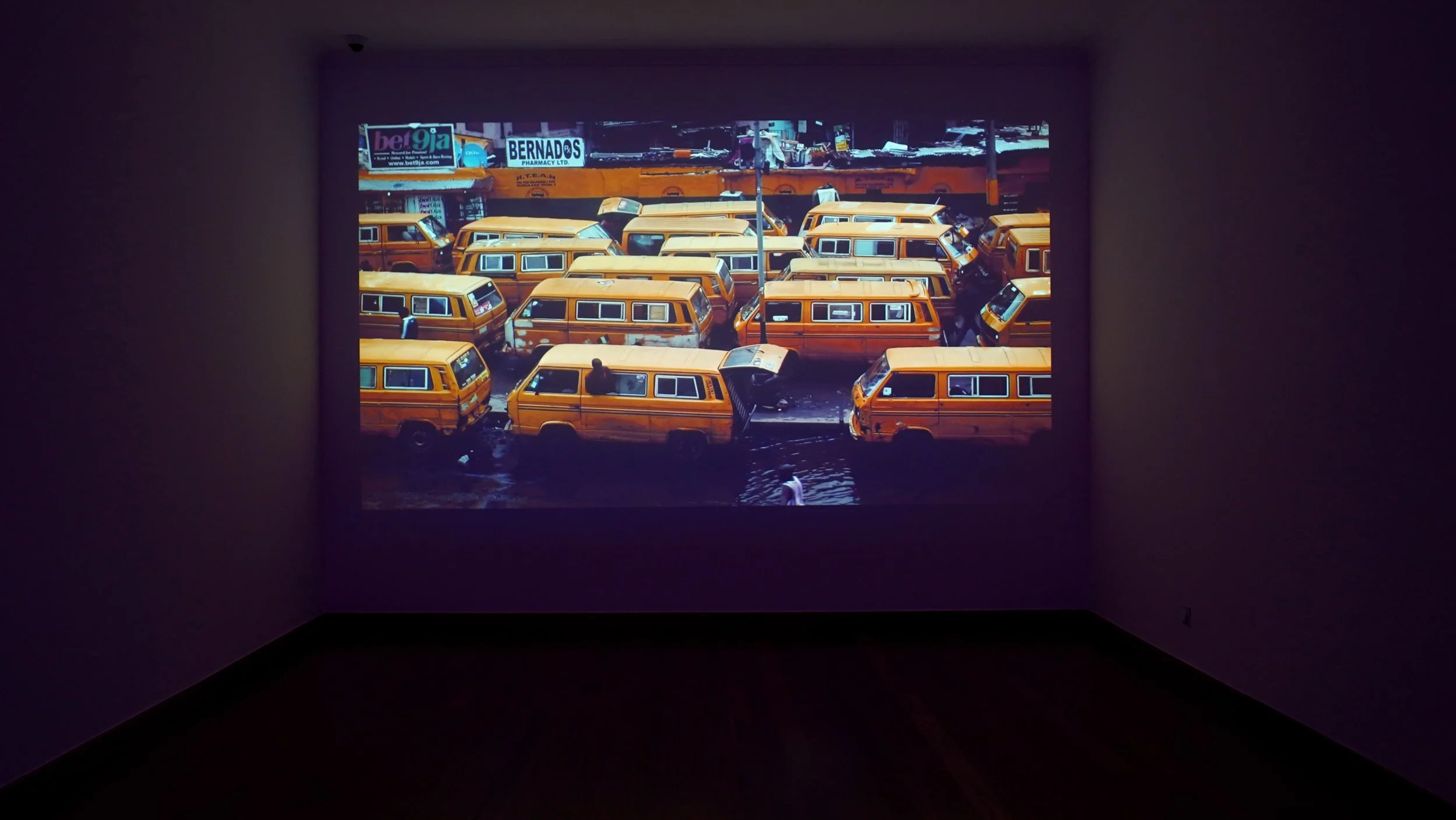
(lagos to lagos) W/ YAGAZIE EMEZI
LAGOS CULTURAL CENTER
CURATED BY LYNHAN BALATBAT
TEXT BY LYNHAM BALATBAT
-
if you gathered them they would be everyone.
gather them.
recognize in them your jawline, your wet eyes, your
long-fingered hands, seeking what but this multitude.
if you gathered them they would not fit on this island.
they would spill back into the ocean whence they came.
when you gather them they will have fins and claws and
names you do not know.
gather them anyway.
some will look you in the eye, some are too microscopic
to see. if you don’t gather them all
you will never be free.
. Alexis Pauline Gumbs1-
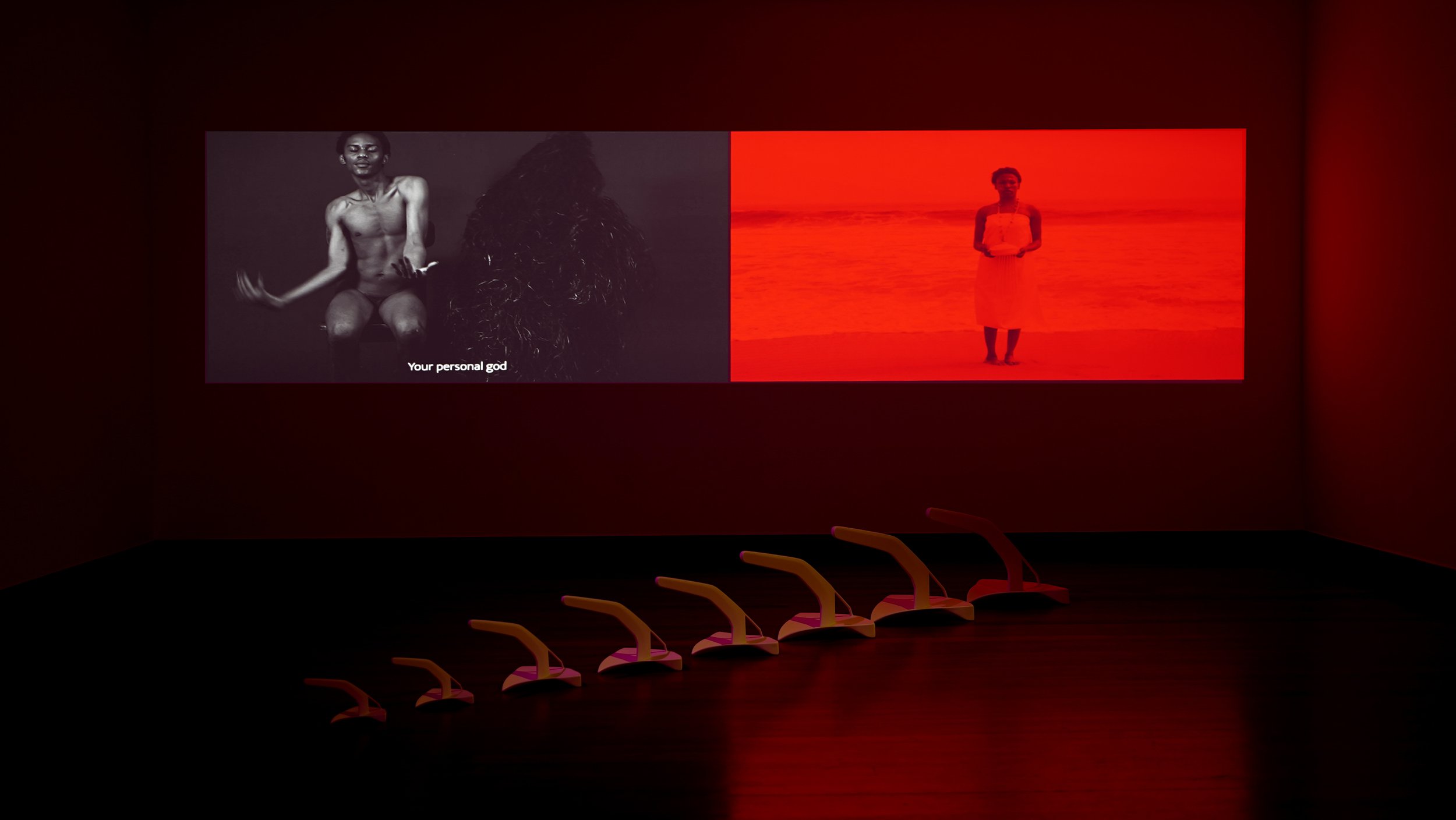
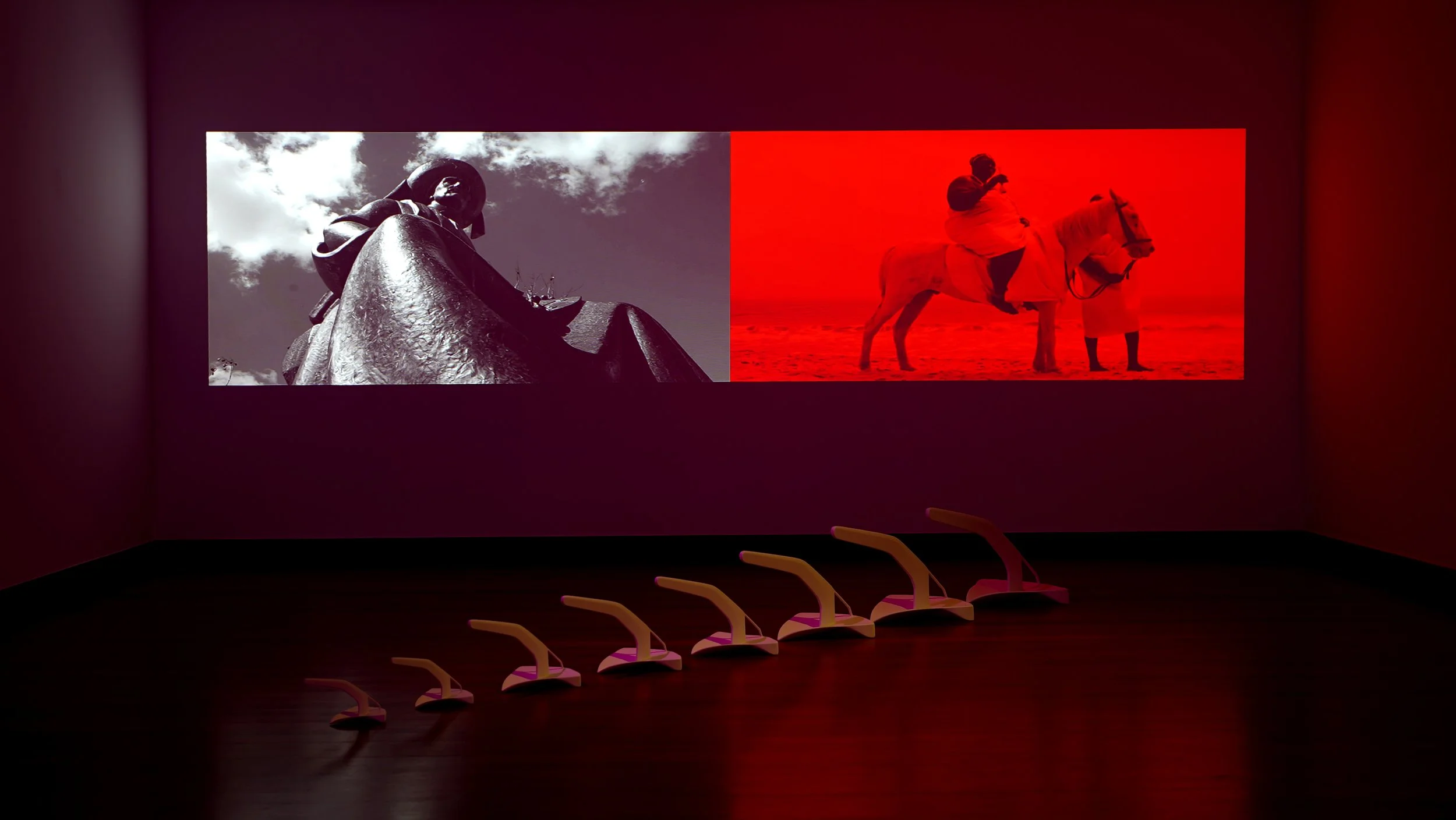
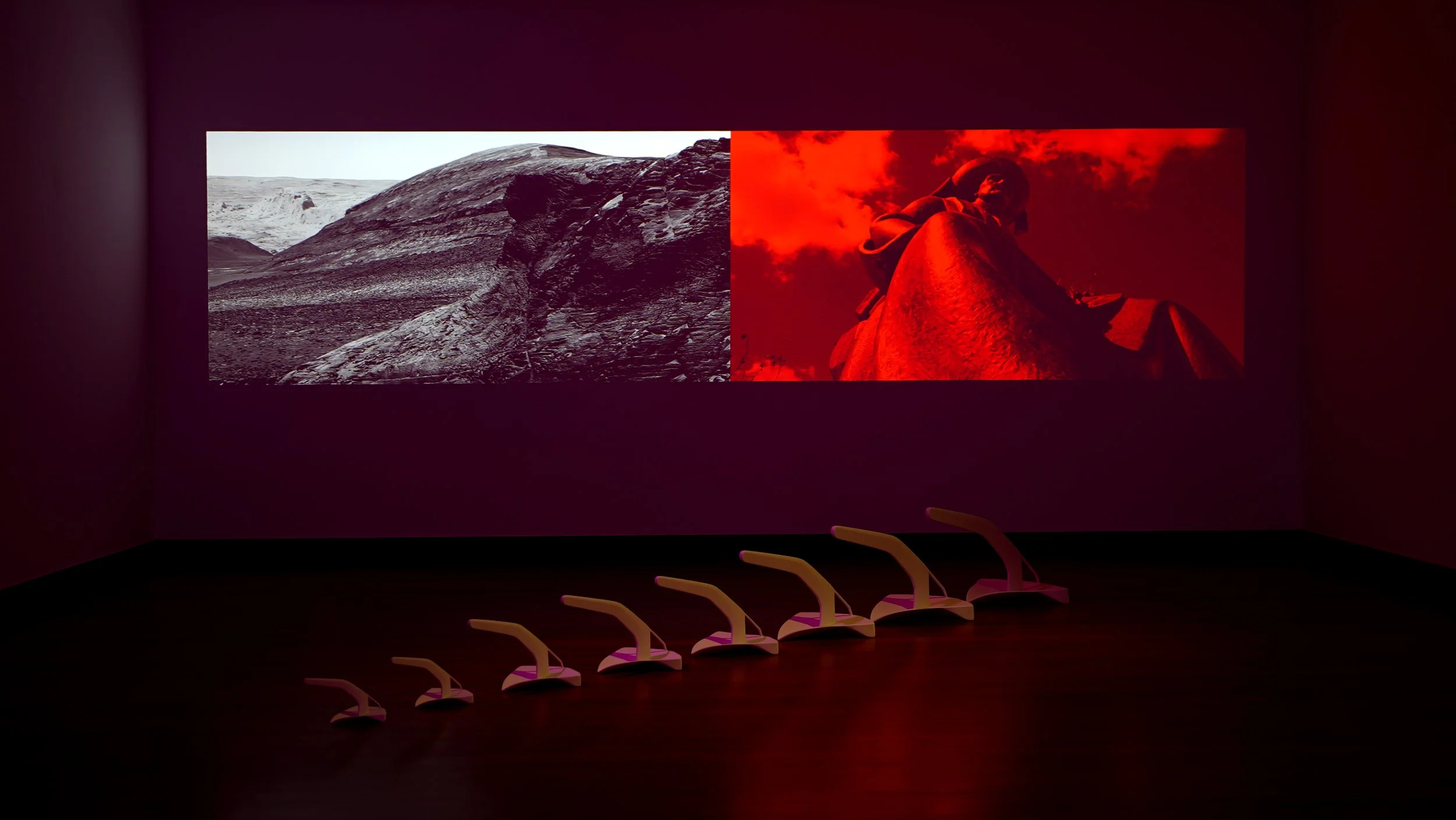
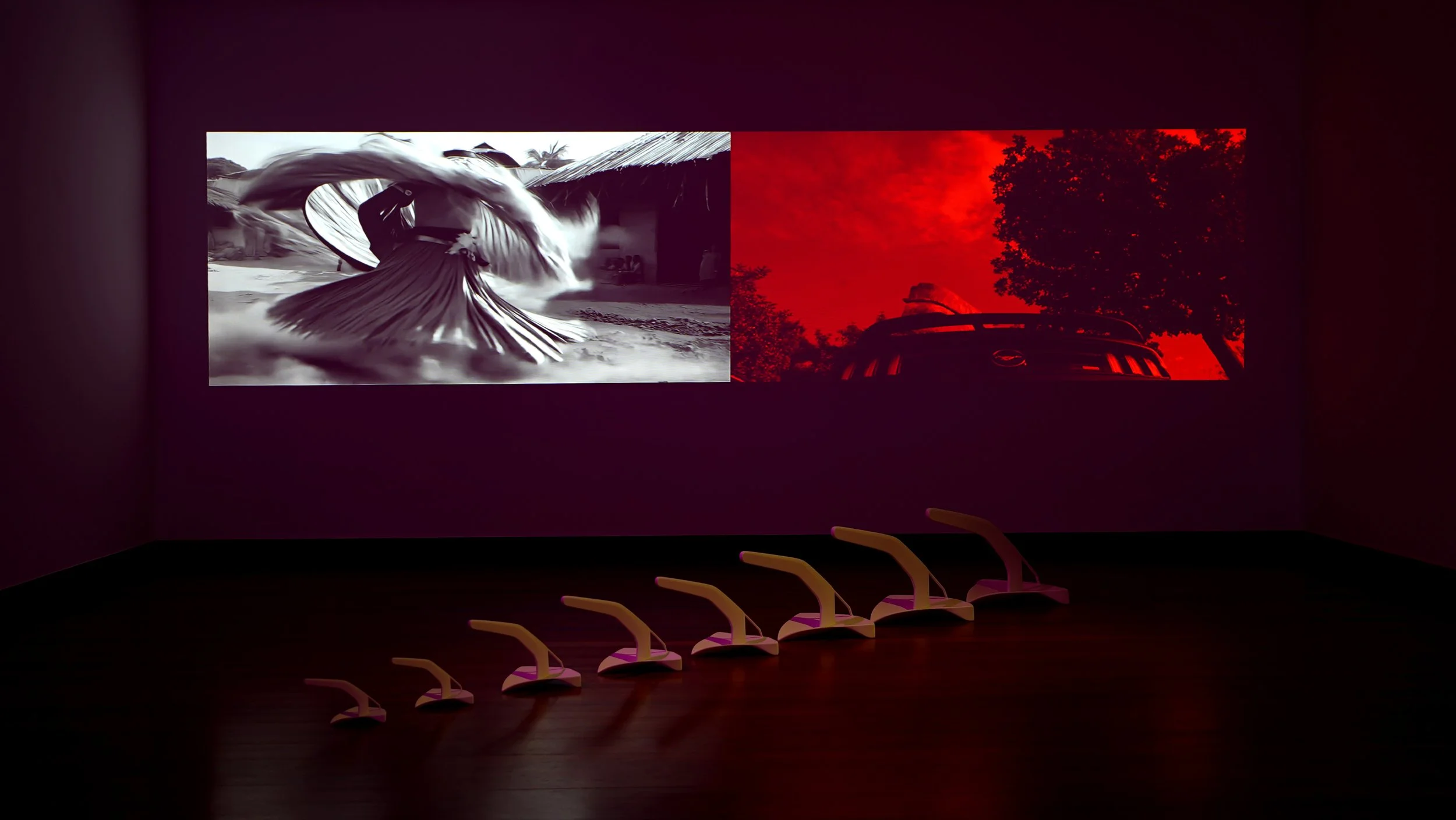
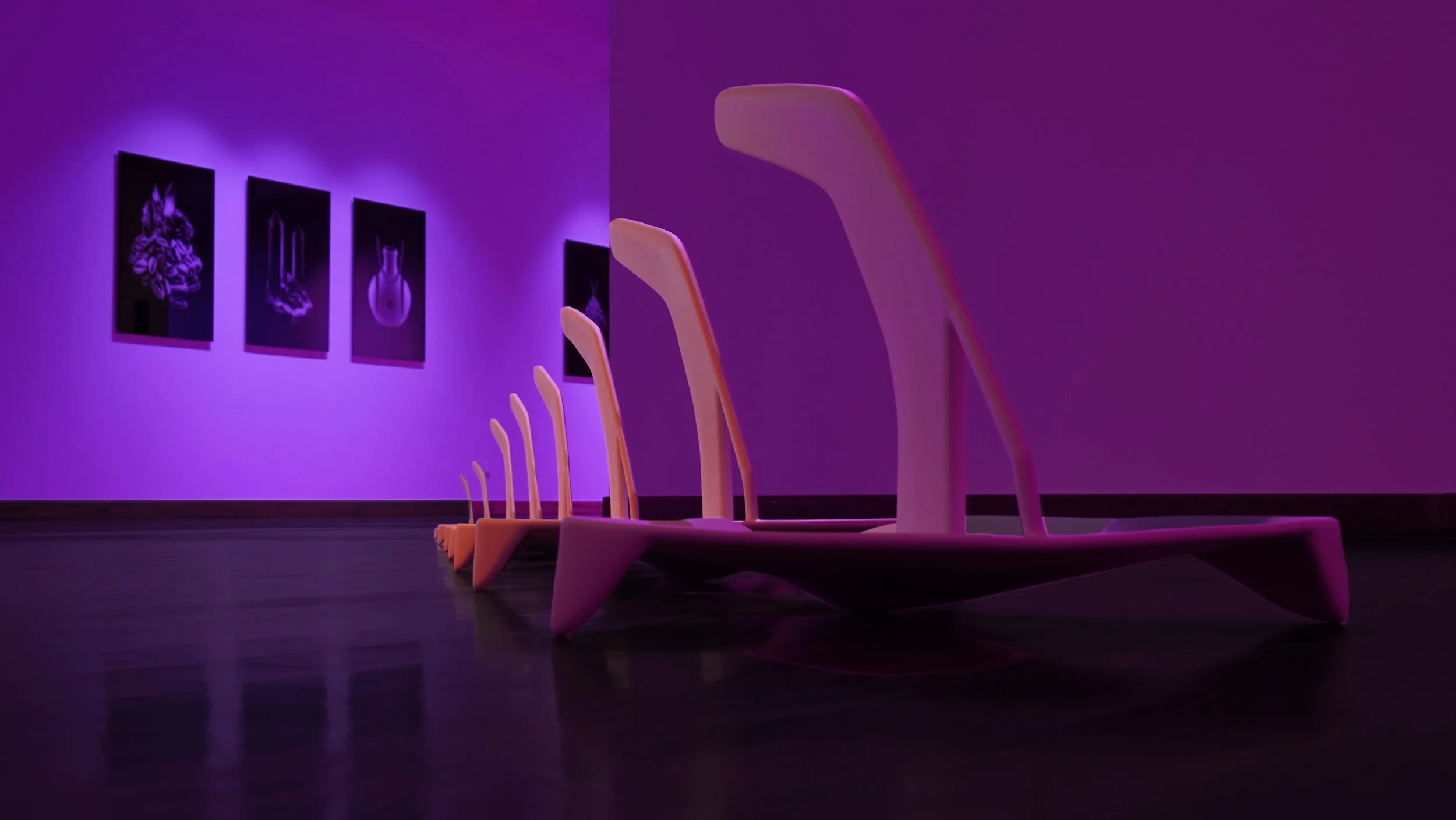
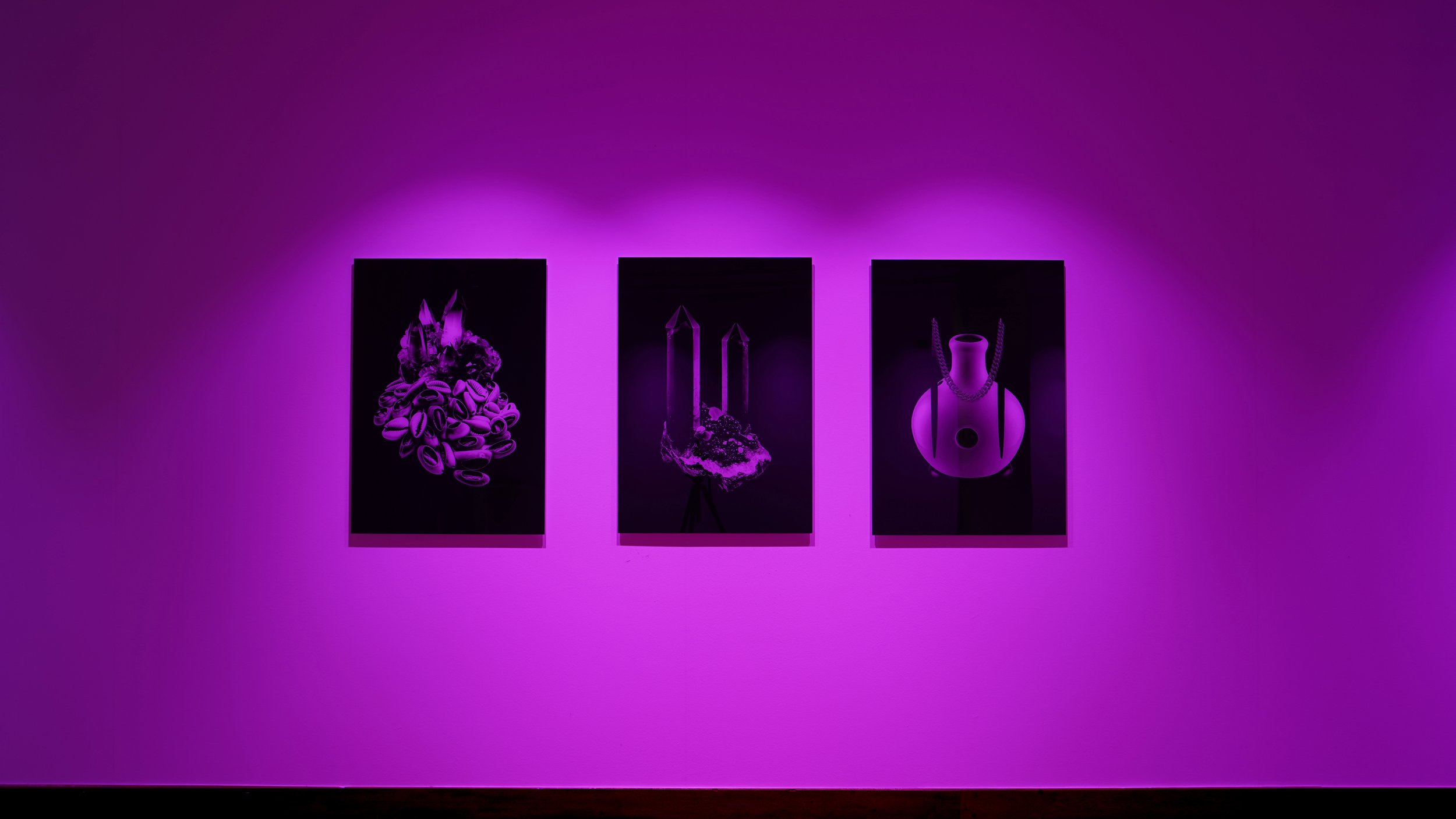
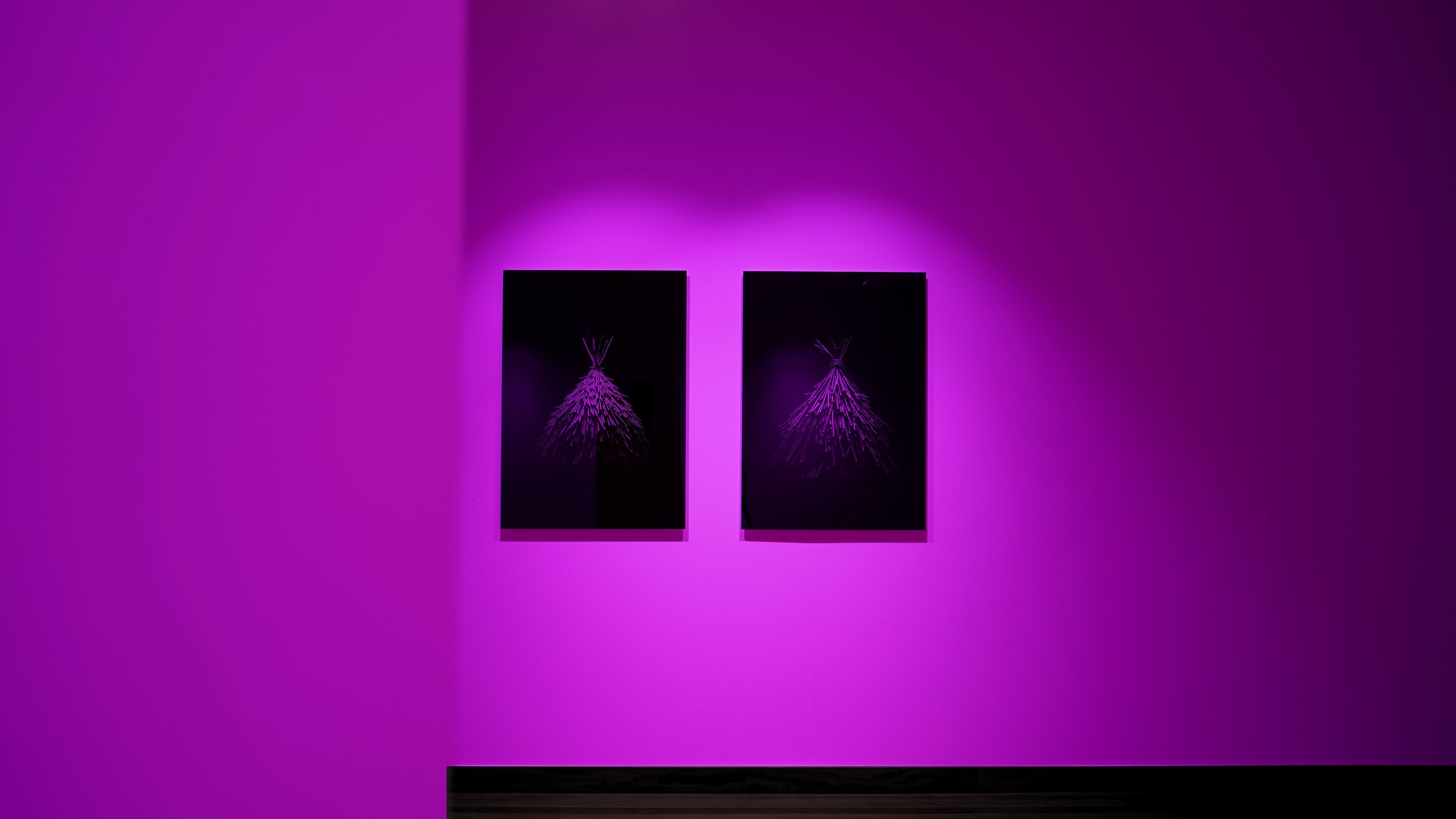
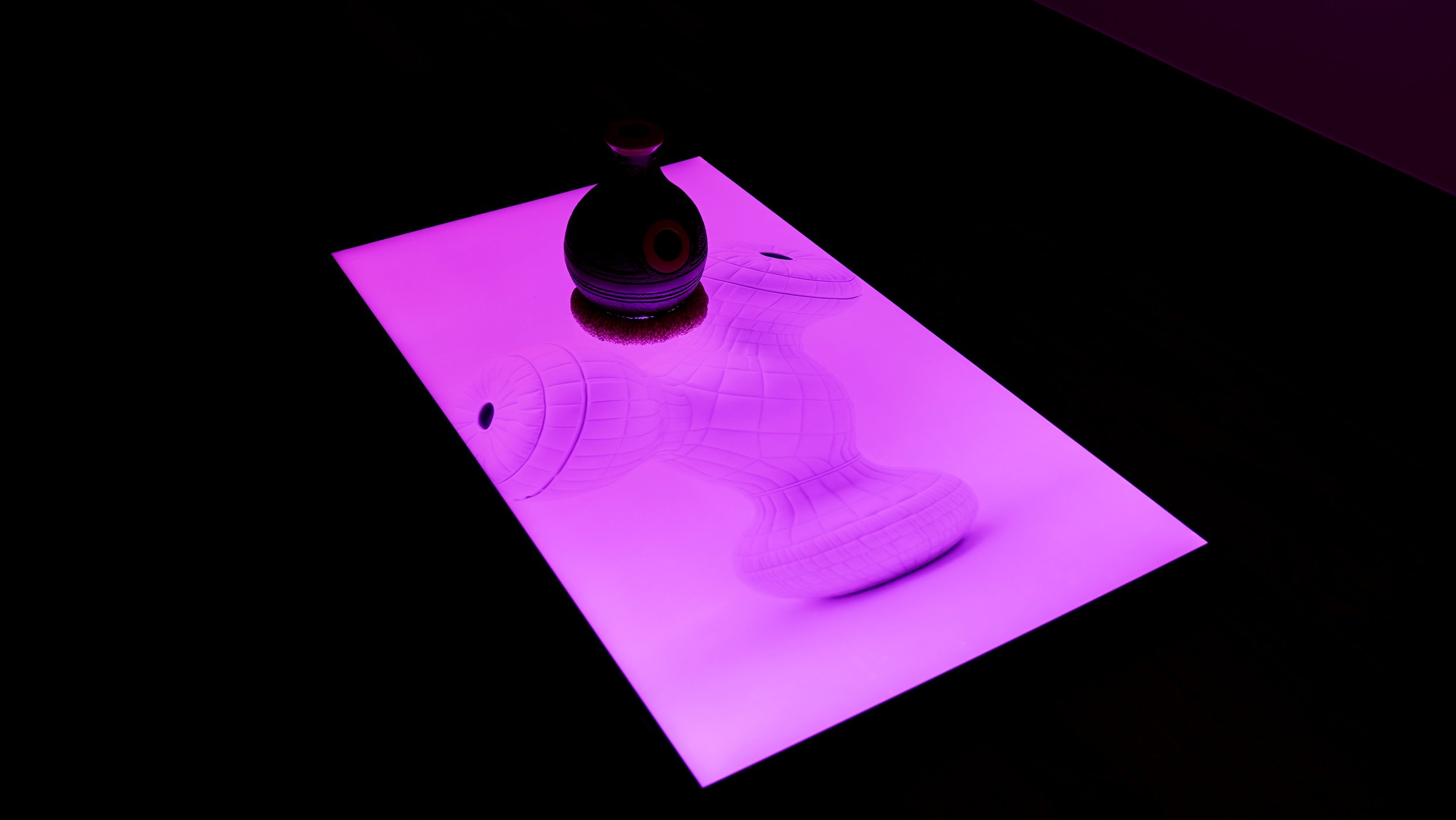
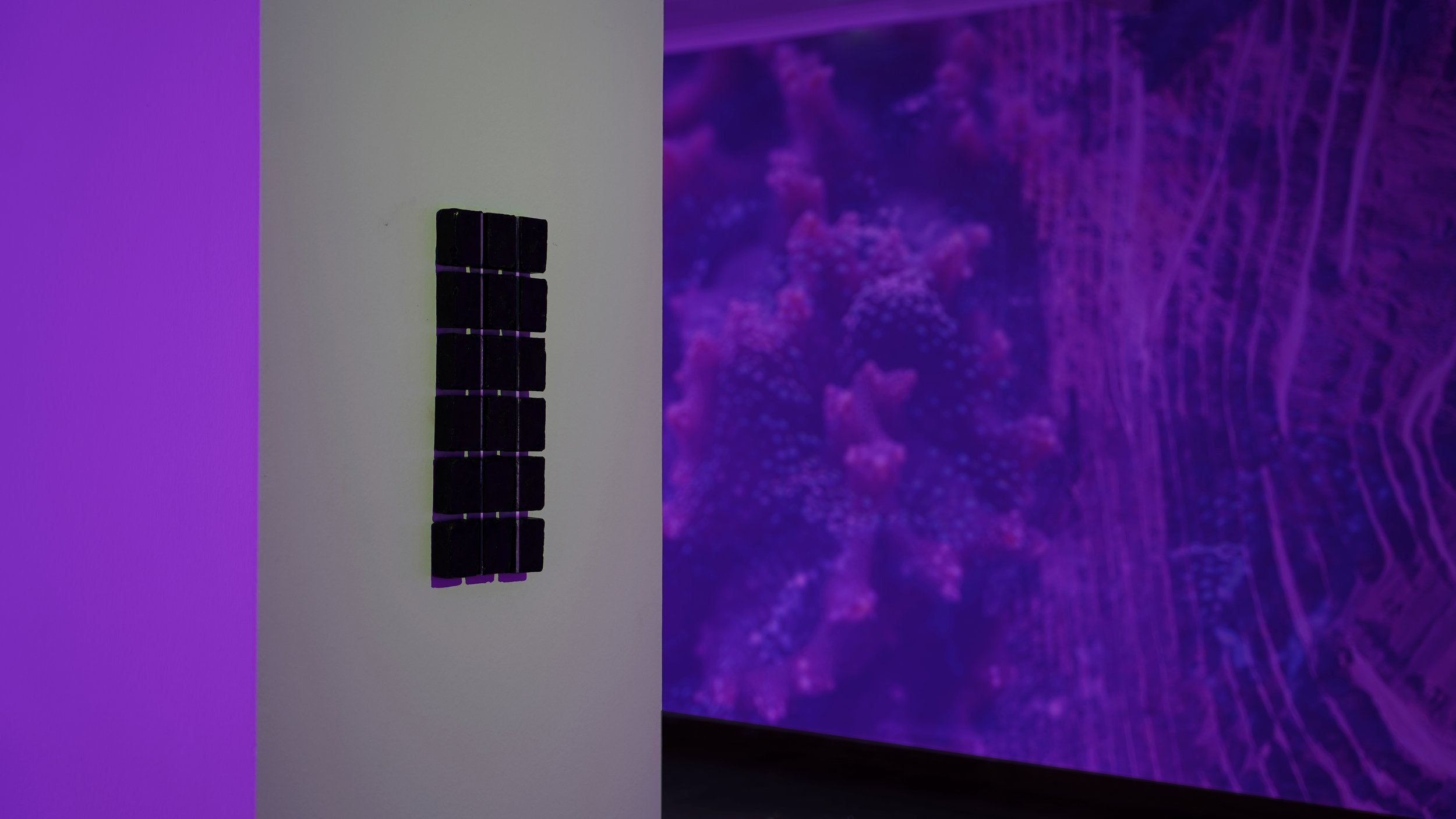
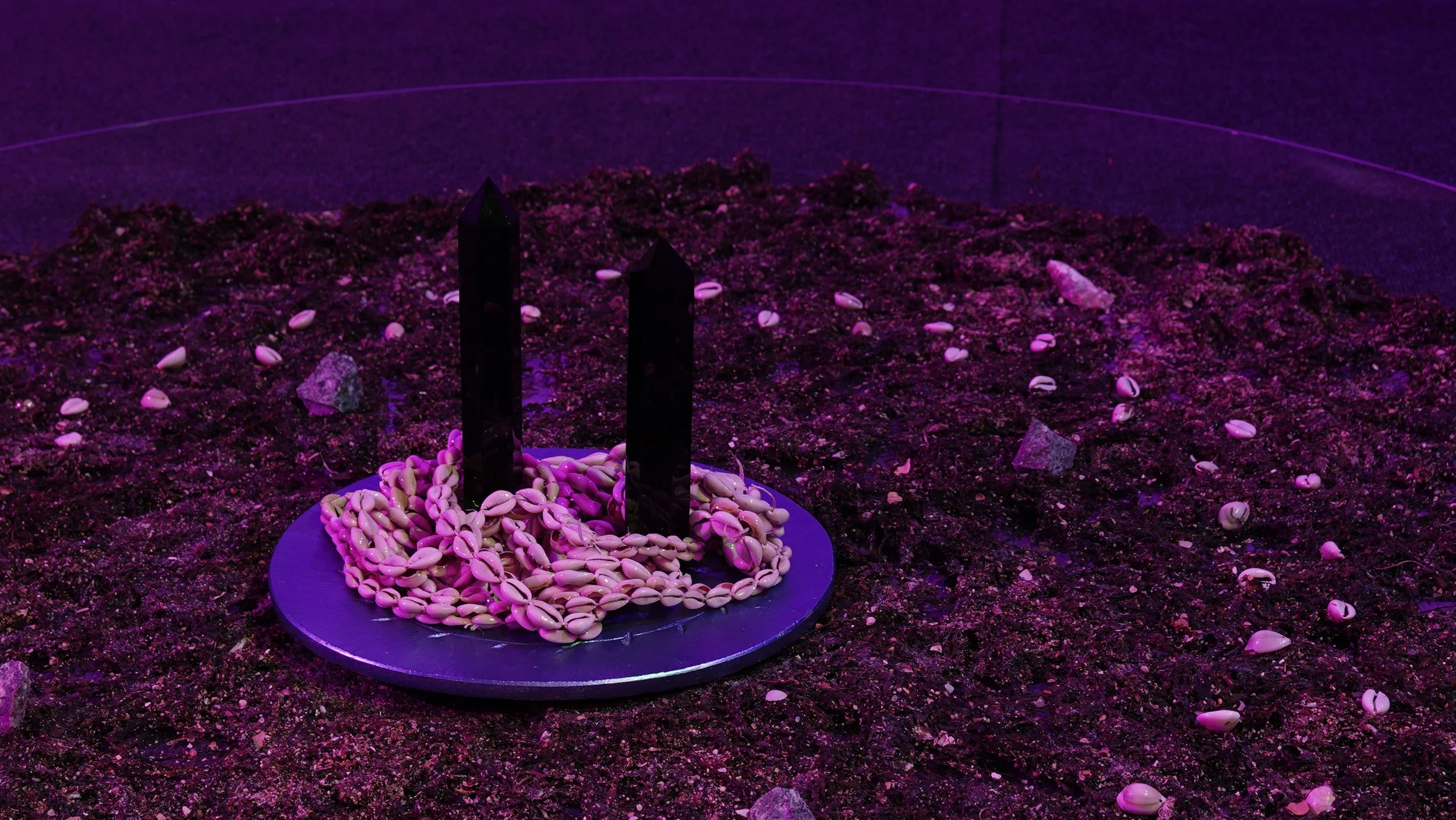
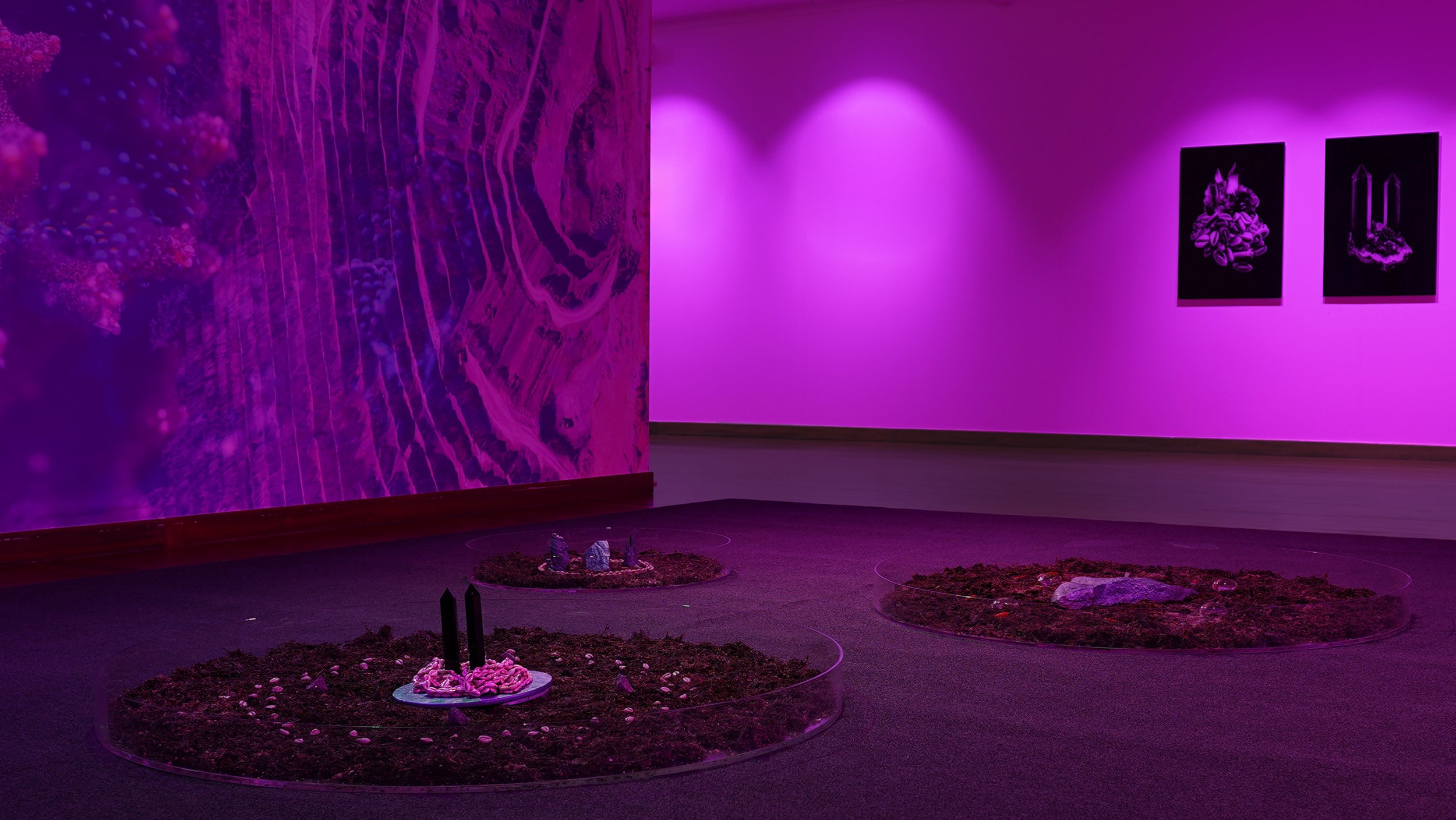
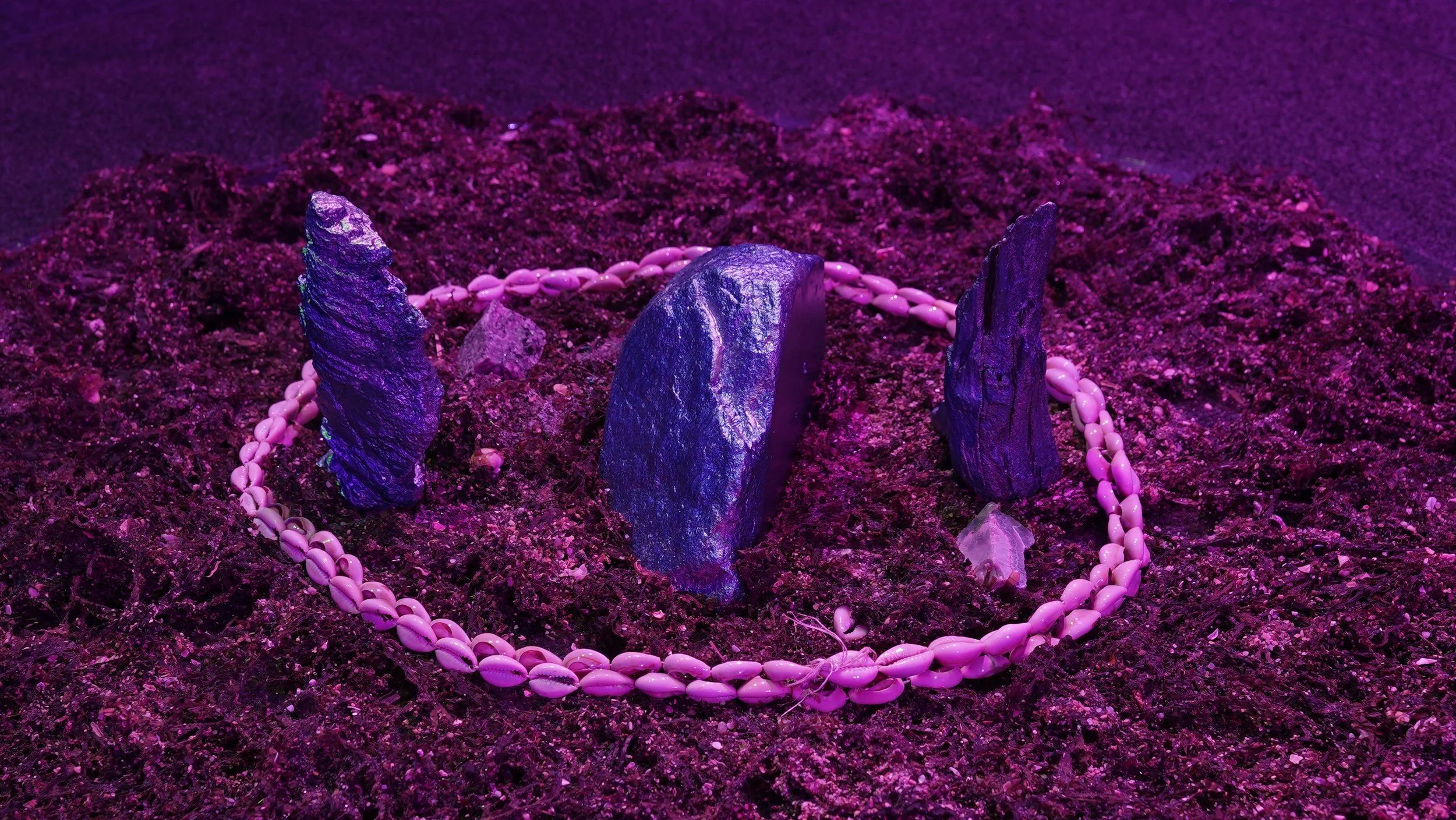
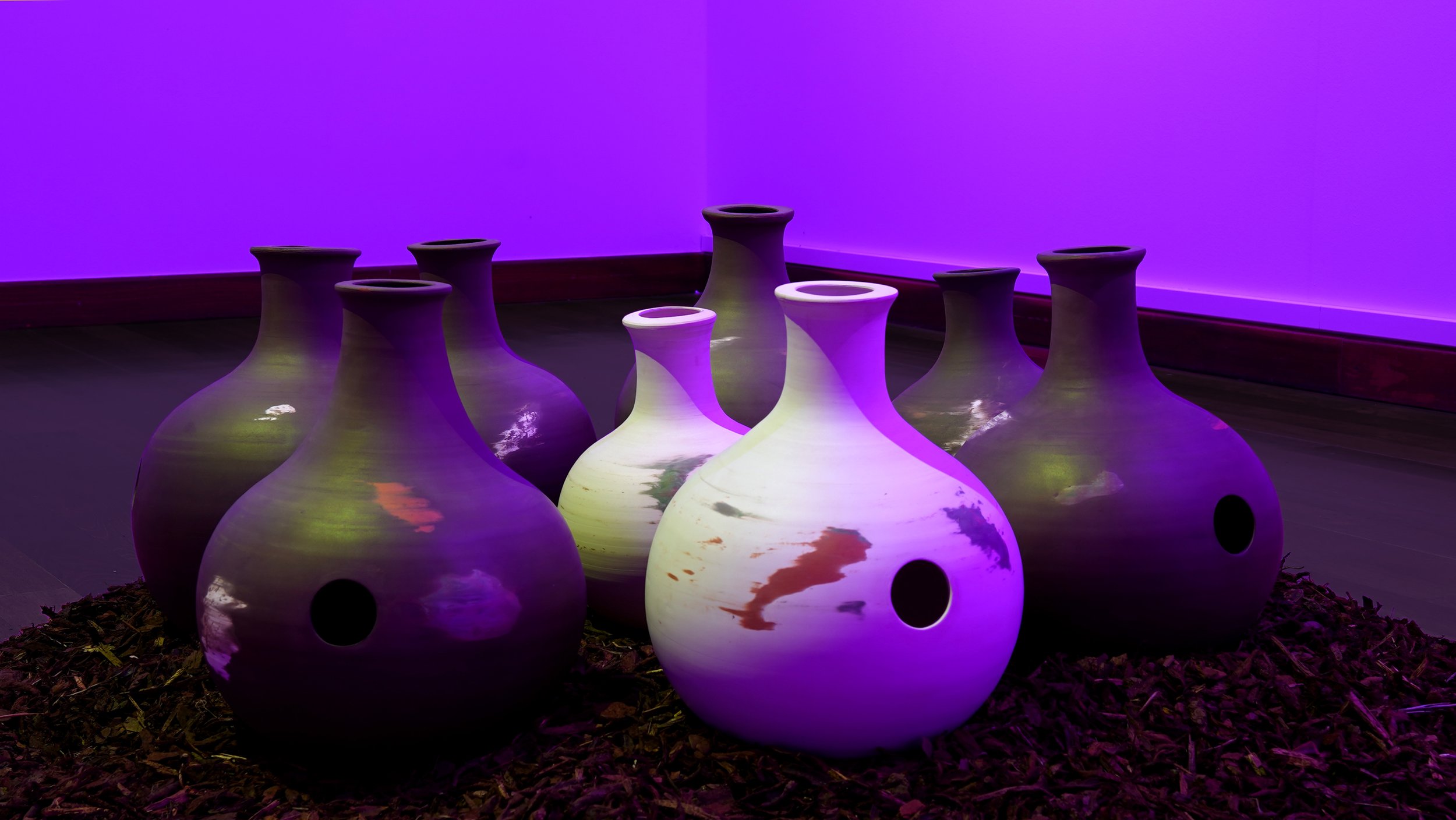
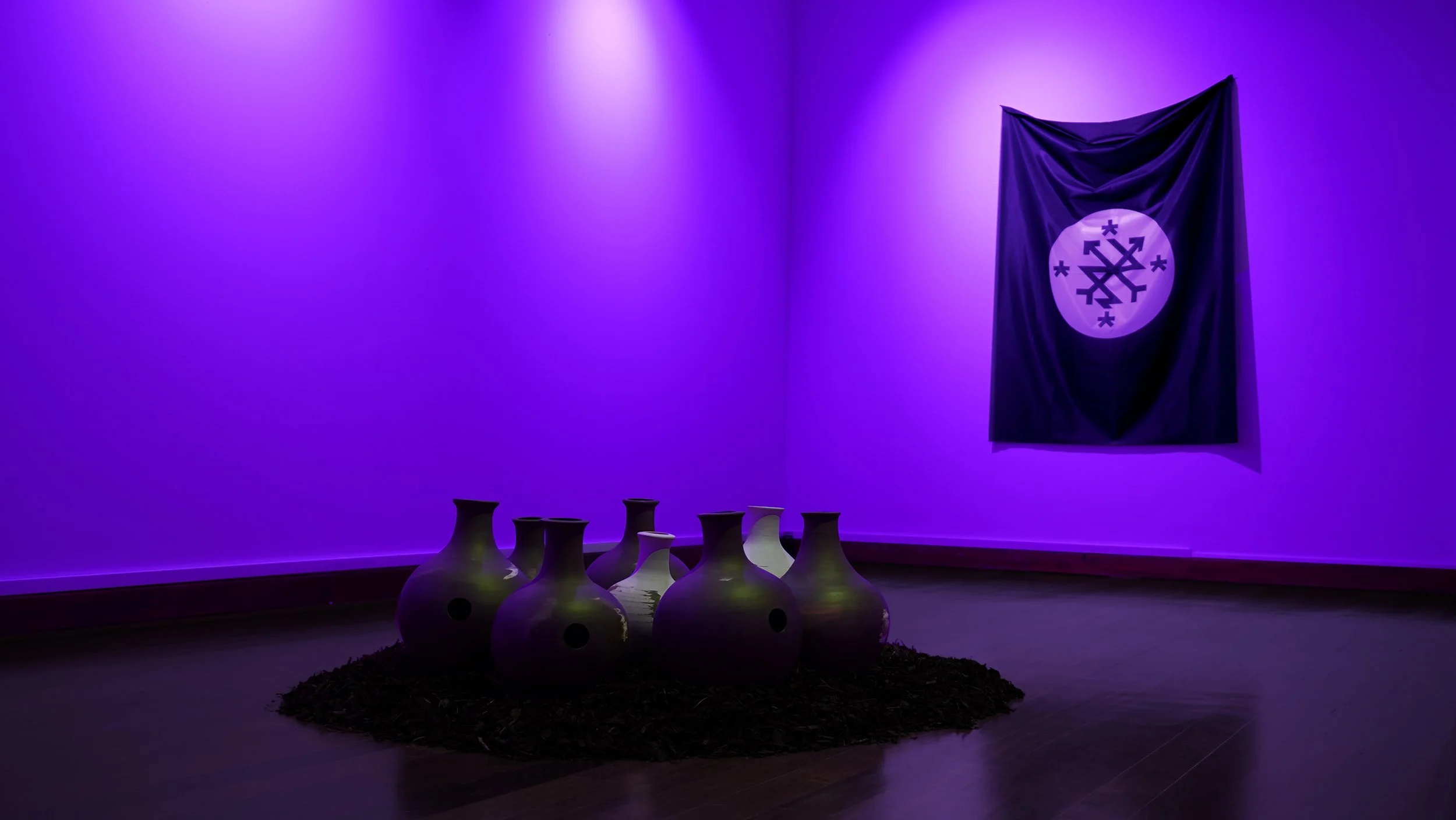
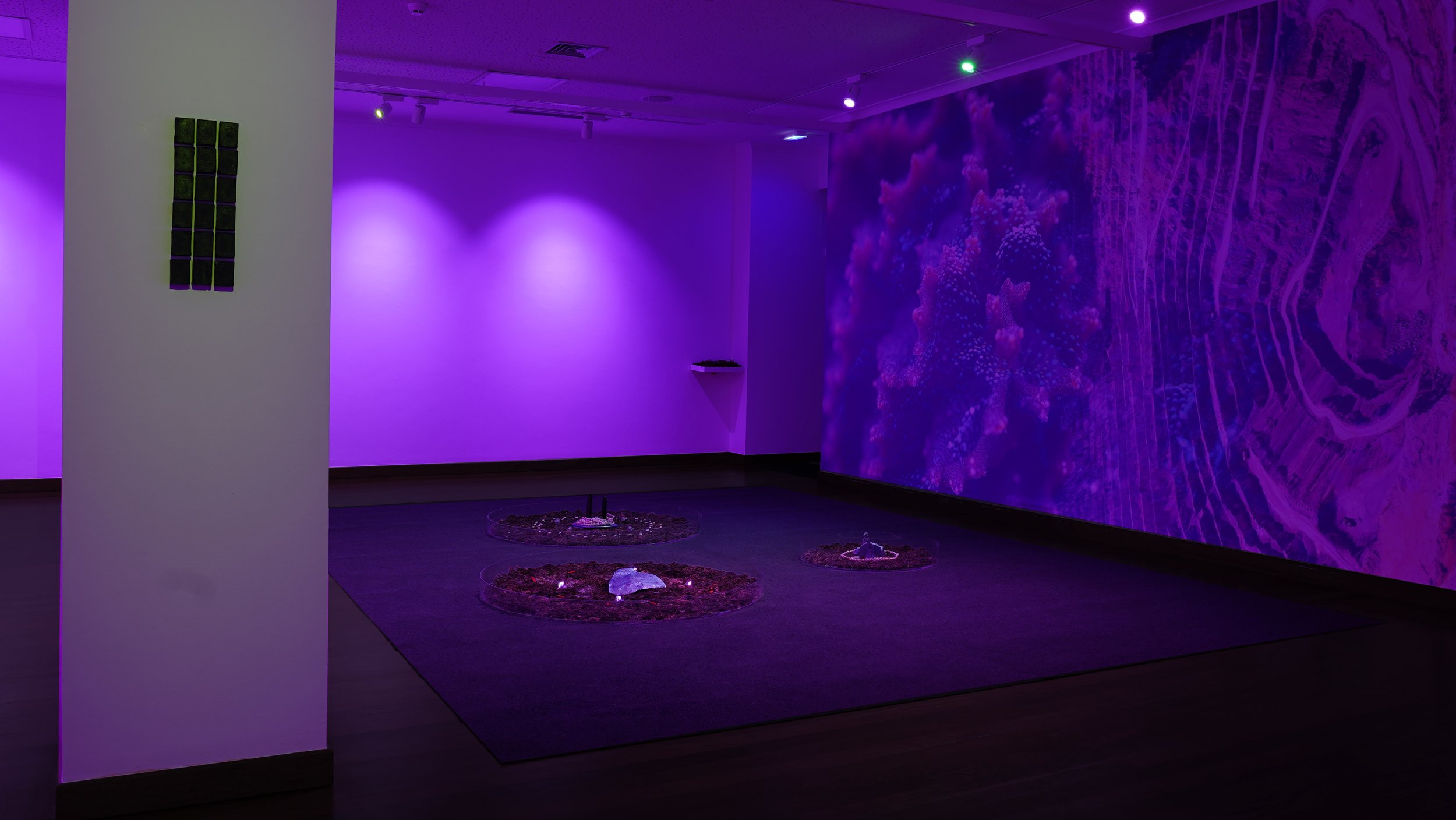
A good story is more than the accumulation of information or a simple plot. It takes some key ingredients to unravel the mysteries of what lies in the past, waiting to ascend, transform the now and shape our fragile tomorrow. It is to captivate the listeners attention, create the rhythm in one’s mouth to softly land in the others imagination. The great gift of revealing a story can be returned by the act of listening closely and immerse yourself in the genesis of a tale. The exhibition unless the water is safer than the land [. . .] - From Lagos to Lagos - is an attempt to invite the visitors to listen to a fragmented story of what we might know, yet partially untold. A narrative that connects the bodies, present ones, the ones before us and the ones yet waiting to arrive. It reveals fragments that we form part of, via the trajectories of three artistic positions that are entangled with their narratives, experiences of violence and questioning the creation of borders. The exhibition, a composition and conversation between the works of the artist Yagazie Emezi, Selma Uamusse alongside
Paulo Arraiano, interweaves text, poetry, image, sound and digital media to create an immersive, speculative, and tactile experience of oceanic life and knowledge. By situating its narrative between Lagos (Nigeria) and Lagos (Portugal), the project interrogates the relationship between land, sea, labor, memory, transportation and future imaginaries, opening questions about rituals of home, modes of displacement, and ecological justice. Imagining alongside the bodies of water connecting the two cities, one is invited to contemplate on the ocean and streamlines as “a meditation on the erosion of freedom of movement, mixed with some nostalgia for those figures who no longer have the right to exist, like the traveler, or the bourlingueur (globetrotter): an anti-figure of the colonial settler and of the ´migrant´ that desperately needs to be brought back to life.”2 Which traces haunt us from the first fevers of conquering what lies beyond from 1441 onwards, how do the trajectories of exploitation and mass trade of human and non-humans manifest in our daily lives?
The multidisciplinary exhibition and research project explores the ocean as both a physical and symbolic space through the lenses of history, ecology, technology, and mythology. Inspired by thinkers like Italo Calvino, Édouard Glissant, and Derek Walcott, it engages with the sea as a living archive and site of migration, memory, and identity. Drawing from pan-oceanic thought and the impacts of the Anthropocene, the project reflects on forced displacement, extractivism, and the continuity of colonial structures in modern technological and planetary developments.
This format is an invitation to imagine which parts of you, the individual just as the collective, remembers along the lines of the presented gestures of shared memory, sound, cellular existence and water both as a transmitter within as well as a force that swallows us. The importance of stories become evident in the light of the dysfunctionality of memorials and the culture revolving around memory. The German language carries several distinctions for the term “memorial”.
The word Mahnmal insinuates for example, that a monument should serve as an admonition regarding a chapter in history. However, a “Never again” as one example has become a mere slogan from a time that is rendered abstract as the oceans of dismembered bodies can testify. Historical revisionism is the new halo that envelopes the understanding of new media and mediocre policies, to underline the norm that the old regimes of power can rise in new shine to harvest what lies beyond power. How much that might cost us? More than we would have to spare, the tribute will be dearer than we can ever imagine..
We shall think that we are not limited by the repetitive monstrosity of our being, practiced from the beginning of the transatlantic trade routes throughout the contemporaries of our time. Places that are united through chapters like the torture and killing of Gisberta Salce Júnior, 70 year old bodies that are sentenced to death by stoning or the story of Fola Francis, an activist and community leader that drowned too soon. What common can we offer specially to the ones not yet born? If our pasts and presents are connected through violence, how can we find soft ankers that root us in practice that is informed by wealth and generosity rather than greed. In times of perpetuate political, economic and identity crisis it is about time to generate alternatives forms of developing commons between people, waters and citiesthat are tangible, soft and wholesome. We can start from the small grain of sand, condense the gaze towards the molecular common denominators of our being, listen to songs and be carried together in a\ symphony of noise in the buzz of a hot day returning home to Surulere.
The ability to put ourselves in the position of the other, anker our practice in conviviality rather than academic confusion makes us rise above hypocrisy. Performing being human as Sylvia Wynter suggests as a challenge or chance for us as a collective being.
The selection of works exhibited in Centro Cultural de Lagos remind us of stories, like an echo from the twin cities that share one name. One lies on the Portuguese coast, the other on the Gulf of Guinea — separated by a body of water, bound together by the memories that humans and non-humans hold. Unless the water is safer than the land [Lagos to Lagos] traverses this invisible basin of violence, memories, and futures. The exhibition offers a poetic-political space of negotiation where water, rhythm, material and immaterial traces of history converge into a critical topography of the sea as a living site of colonial repetition and as a utopian field of speculative regeneration for us and the worlds we carry in our bodies.
_________
1) Dub – Finding Ceremony 2020, Alexis Pauline Gumbs p.8
2) Stream lines – Oceans 2016, Global Trade and Migration, Koyo Kouoh & Dirk Luckow, p.25